Git · npm · dependents
One control panel for the projects you track on your machine.
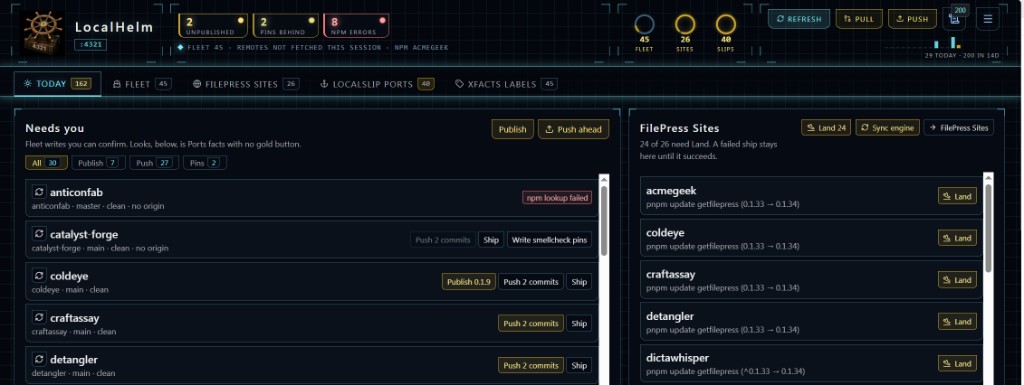
See which projects need a commit, push, release, or dependency update. Review the proposed changes before applying them.
Start with the repository board. Add LocalSlip for the documented dev-server workflow, FilePress for site builds, and ollanet for optional model-assisted drafting. Those are optional. The core board is the repo list.
Commit, publish, and dependent-update actions show a plan for you to confirm before they run. Actions run on the computer hosting LocalHelm.
The controls depend on where you open it:
- Operator board,
http://127.0.0.1:4321on the machine that runslocalhelm serve: every read and every write. - Deck,
/deckfrom a phone or any other device on your LAN or Tailscale: read-only. It shows one tile per running app that has a LocalSlip claim and listens beyond127.0.0.1. Tap a tile to open that app. Long-press to copy its link. No commit, publish, start, or stop.
LocalHelm refuses write requests unless they come from loopback, so a phone cannot run them even with the right URL.
Install, stand in the folder that contains your repos, then run:
localhelm serve
On the board, click Add projects, scan the folder, tick the repos you keep, and confirm. Nothing enrolls on its own.
The CLI runs the same actions. scan, status, and deps only read. Other commands print a plan, and --apply writes. publish, push, ship, and global need named ids. Never --force.
Start and stop need LocalSlip. The Sites tab needs a FilePress site. Both are optional; without them those tabs stay empty.
LocalSlip is the slip. LocalHelm is the wheel.
Docs · Install · Why a wheel